

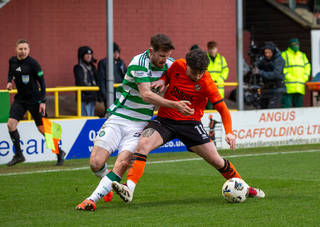
Dundee United, founded in 1909, remain one of Scottish football’s established names: not overburdened with silverware, but with enough history to matter. Their honours list includes one Scottish Cup, and The CalForth Construction Arena still gives them a recognisable footing in the domestic game.
This season’s side is young and comparatively lean, with a 25-man squad averaging 24 years of age and valued at around £10m by Transfermarkt. Their League Cup involvement reached the second round, while the Premiership campaign has been steady enough to keep them in the top half conversation.
The recent league run has been awkward to dismiss: a 2-2 draw with Celtic, a 3-2 win over Aberdeen, and victories against Hibernian and St Mirren sit alongside draws with St Johnstone and Falkirk. They have also shown a habit of starting with purpose, scoring inside the opening 20 minutes in five of 14 league matches.
There is threat in the forward areas, led by Zac Sapsford with six goals and Lachlan Rose with four, with Lyall Cameron, Jesse Randall and Dylan Tait contributing two apiece. The away numbers tell the usual trade-off: 1.7 goals scored per match, but the same conceded, which makes them dangerous enough going forward and clearly gettable at the back.
After 12 of 38 Premiership rounds, Dundee United sit sixth with 16 points. For Celtic supporters, they are a live domestic opponent rather than a background fixture: organised enough to take seriously, open enough to be attacked.
📈 Key stats and insights

⚔️ How they compare to Celtic
Compared with Celtic, Dundee United are the inferior side overall: Celtic outscore opponents roughly 2.5 at home and 2 away while conceding about 0.8 both home and away, so Celtic have the clear edge in attacking potency and defensive solidity. United's main threat to Celtic would be their superior away scoring rhythm and set-piece volume, but on aggregate Celtic remain stronger across the key metrics.