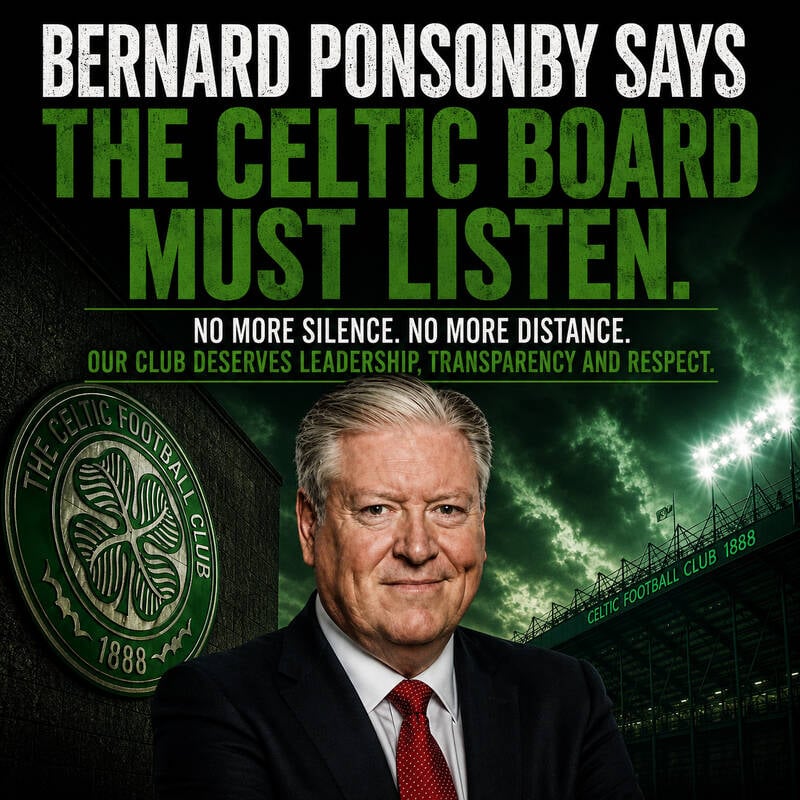
Bernard Ponsonby has criticised Celtic’s European progress, board communication and lack of clear long-term strategy.
- Ponsonby accepts Celtic have dominated Scottish football for much of the last 25 years.
- He says domestic success cannot shield the board from criticism over repeated European stagnation.
- Supporters rarely hear Dermot Desmond set out his vision for Celtic directly.
- Martin O’Neill’s appointment at 74 raises succession and long-term planning questions.
- Celtic need clearer communication on Europe, infrastructure and success beyond Scottish titles.
For years, Celtic supporters who questioned the direction of the club have been dismissed as reactionary, impatient or impossible to please. Yet when someone with the credibility, experience and measured approach of Bernard Ponsonby speaks out, it becomes much harder for the board to hide behind the usual excuses.
Ponsonby’s criticism is significant because it comes from someone who openly acknowledges the successes Celtic have enjoyed under the current custodians. He recognises the club has dominated Scottish football for much of the last quarter-century and accepts that does not happen by accident. Good decisions have undoubtedly been made off the park.
However, his argument is that success domestically cannot be used forever as a shield against legitimate criticism elsewhere.
His central point is one many supporters have been making for years. Celtic have failed to make meaningful progress in Europe despite possessing financial advantages that most clubs on the continent can only dream about. The club continues to bank millions while supporters watch opportunities come and go season after season.
Ponsonby correctly identifies what many believe is the root cause: a reluctance to properly invest when the moments demanded ambition.
But perhaps the most damning criticism is not about money at all.
It is about communication.
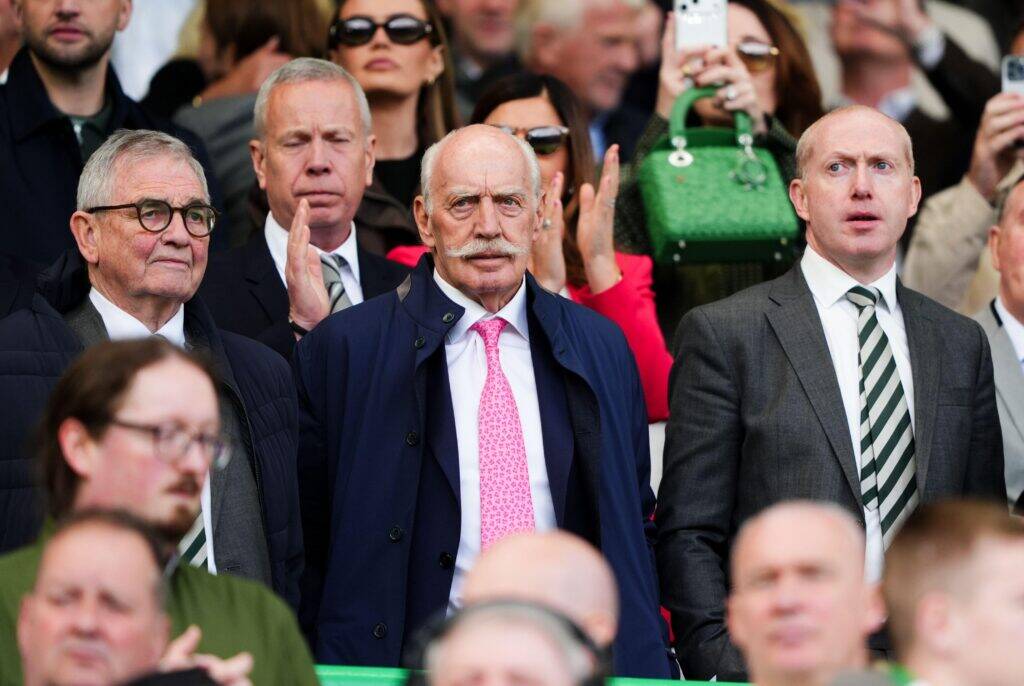
Supporters are repeatedly told to trust the process, trust the board and trust those making the decisions. Yet many supporters would struggle to explain what Dermot Desmond‘s actual vision for Celtic is because they have rarely, if ever, heard it directly from him.
That is an astonishing position for a football club of Celtic’s size to find itself in.
Modern football supporters are not merely customers purchasing tickets. They are emotionally invested stakeholders who pour thousands of pounds and countless hours into following their club. They deserve transparency, honesty and engagement.
Instead, what supporters often receive is silence.
When major decisions are made, explanations are sparse. When controversies emerge, communication is reactive rather than proactive. When frustration grows, supporters are frequently left talking amongst themselves while rumours fill the vacuum.
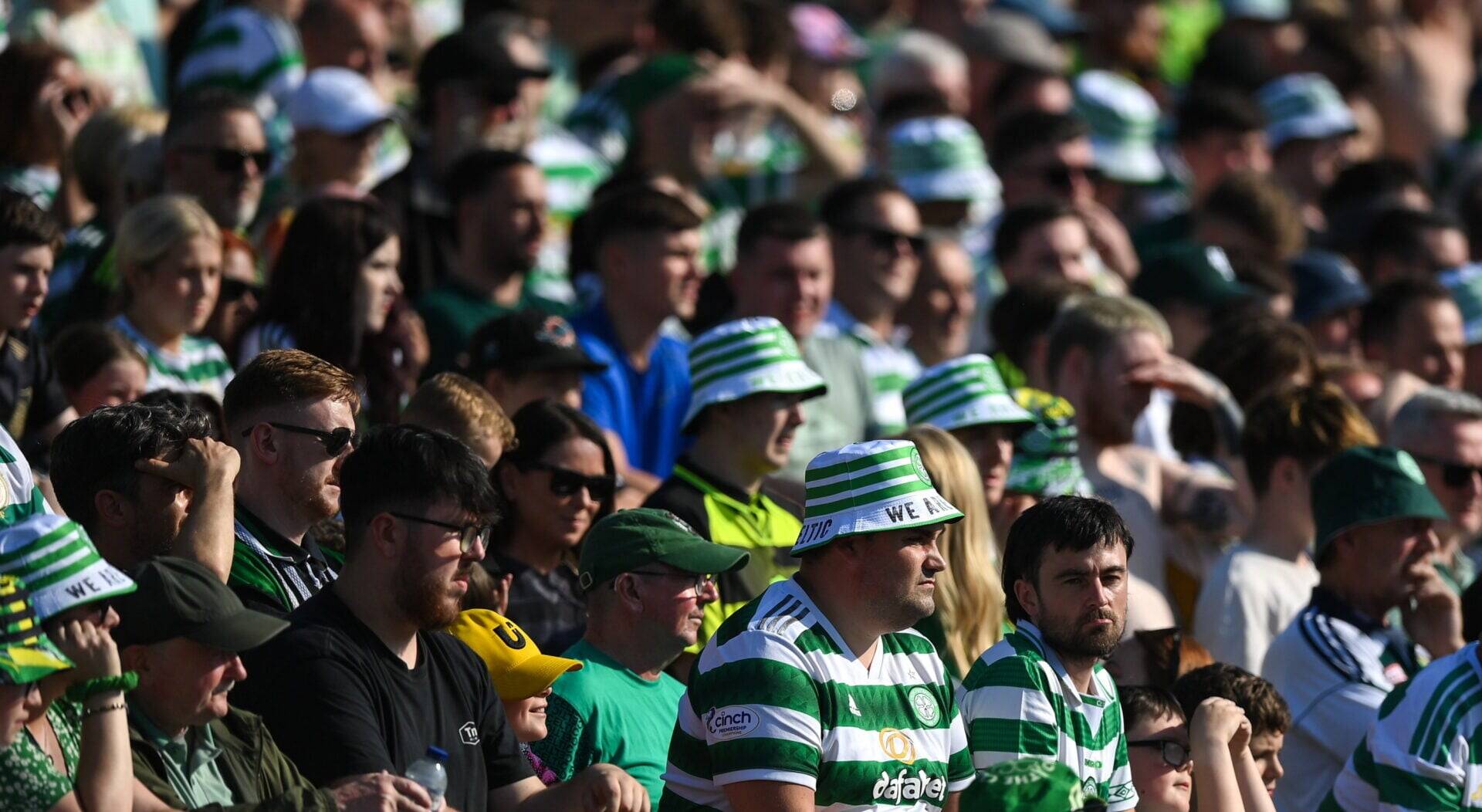
Ponsonby’s observation that supporters have become divided should concern everyone connected with Celtic.
For generations, Celtic’s support was renowned for its unity. Disagreements existed, but there remained a shared sense of purpose. Over the last few years, however, a widening disconnect has emerged between the boardroom and the terraces, and that disconnect has inevitably spilled into the support itself.
That is not healthy for any football club.
Leadership is not simply about balancing accounts and reporting profits. Leadership is about setting a vision, explaining decisions and taking supporters with you on the journey.
Too often Celtic’s hierarchy appears content to communicate only when absolutely necessary.
This is where Ponsonby’s comments become particularly powerful. He is not demanding reckless spending. He is not calling for chaos or revolution. He is asking for accountability, transparency and a clear direction of travel.
Those should be the minimum expectations at a club of Celtic’s stature.
His concerns regarding the appointment of Martin O’Neill are equally valid. While O’Neill’s achievements and standing within the game are unquestionable, appointing a 74-year-old manager does not represent long-term planning. It raises obvious questions about succession, continuity and future strategy.
Supporters are entitled to ask what the club’s plan looks like beyond the next season.
What is the vision for the next five years?
What is the strategy for Europe?
What improvements are planned for infrastructure?
What does success actually look like beyond winning another Scottish title?
These are questions supporters should not have to guess the answers to.
Perhaps most importantly, Bernard Ponsonby’s comments highlight something Celtic desperately need: a modern, professional and credible communications operation.
In truth, Celtic should be looking for people with Ponsonby’s qualities to help shape how the club engages with its supporters. He understands accountability. He understands how to communicate difficult messages. He understands that trust is earned through openness rather than demanded through silence.
For too long, Celtic’s communications strategy has felt defensive, distant and disconnected from the concerns of ordinary supporters.
Someone with Ponsonby’s ability to articulate issues clearly, challenge authority constructively and engage with people honestly would be a tremendous asset to any communications department.
The frustration currently surrounding Celtic is not simply about managers, transfers or results. It is about supporters feeling excluded from conversations about the future of their own club.
Bernard Ponsonby has given voice to those concerns in a way few public figures have been willing to do.
The board would be wise to listen.
Because if they continue to ignore the message, they may soon discover that the growing disconnect between supporters and those running the club becomes impossible to repair.